
Digital hearing platform to revolutionise cochlear implant care
Why is individualised cochlear implant programming needed?
Post-operative implant programming remains a highly specialised, time-intensive process, relying on exhaustive behavioural testing.3
As a result, many parameters default to standardised settings that may not reflect the individual’s real-world hearing needs. Current programming often occurs in clinical settings using subjective feedback, limiting optimisation for everyday listening environments, particularly the ability to understand speech in noisy background.
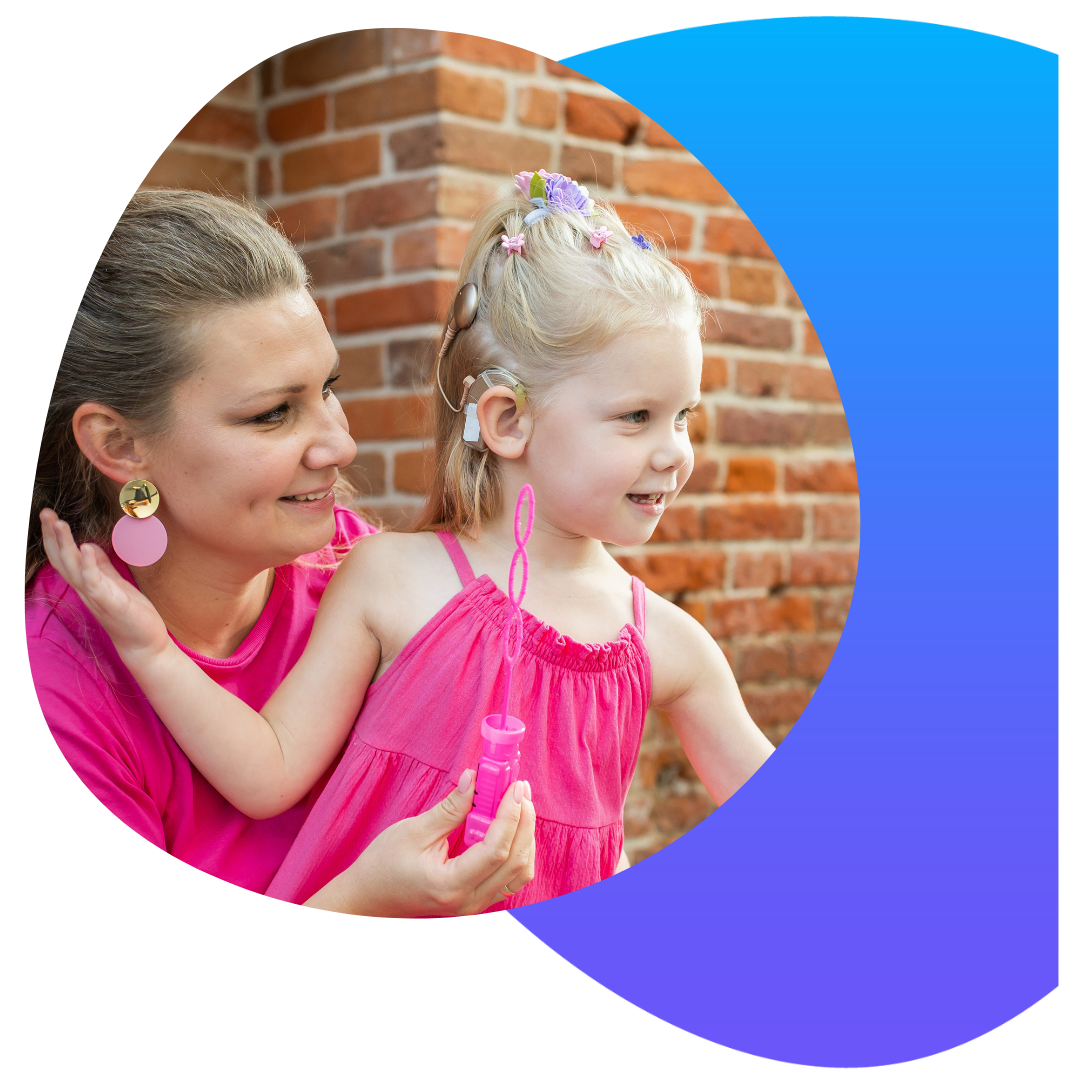
Additionally, for children born with hearing loss, cochlear implants can offer the opportunity to develop speech, language and foundational learning skills because hearing is essential for early cognitive, social and emotional development. However, the benefits rely on one critical factor: accurate and individualised programming of each implant.
Research at the Bionics Institute
Bionics Institute researchers are creating a pioneering digital twin platform that uses artificial intelligence to personalise cochlear implant programming.
This innovative research aims to:
- Reduce reliance on audiologist experience and manual adjustments
- Minimise the need for behavioural feedback—particularly important for infants
- Speed up and improve the accuracy of cochlear implant programming
- Create a personalised digital model of each implant recipient’s auditory system
- Prevent future programming errors.
A vision for safer and more accurate cochlear implant care
The digital twin platform is designed to be used across audiology clinics in Australia and internationally. By integrating advanced AI-supported programming into clinical care, we aim to ensure:
- More consistent and standardised programming practices
- Improved developmental outcomes for children and adults with hearing loss
- Enhanced confidence for families and clinicians
- Greater protection against systemic programming errors
Next steps for Bionics Institute researchers
We are working to develop the first-ever digital twin of a cochlear implant user, which includes a personalised, data-driven system designed to enable objective, client-specific optimisation of cochlear implant programming.
We will leverage our clinically validated psychophysical measurements, advanced computational models and cutting-edge machine learning algorithms to assess the condition of the cochlea and auditory nerve and predict the optimal implant programs.
Ultimately, we hope that implant users will experience significantly improved speech understanding when using programs optimised through our outcome-driven approach, compared to their current standard clinical programming protocols.
The research team
Bionics Institute researchers:
Dr Demi Gao, Professor James Fallon, Professor David Grayden, Dr Tommy Peng
Publications
[1] X. Gao, D. B. Grayden and M. D. McDonnell “Unifying information theory and machine learning in a model of electrode discrimination in cochlear implants”, PLoS ONE, Vol.19, e0257568, 2021.
[2] Peng T, et al., McKay CM. Comparing Patient-Specific Variations in Intra-Cochlear Neural Health Estimated Using Psychophysical Thresholds and Panoramic Electrically Evoked Compound Action Potentials (PECAPs). J Assoc Res Otolaryngol. 2025:1-5.
[3] X. Xia, D. X. Gao, T. Brochier and D. B. Grayden “Estimating User-Specific Current Spread and Neural Health Parameters in a Model of Hearing with Cochlear Implants”, 46th Annual International Conference of the IEEE Engineering in Medicine and Biology Society, Orlando, Florida, USA, 2024 (full-length peer-reviewed conference publication).
[4] X. Gao, D. B. Grayden and M. D. McDonnell “Modeling electrode place discrimination in cochlear implant stimulation,” IEEE Transactions on Biomedical Engineering, Vol. 64, 2219-2229, 2016.

