
Rethinking Rheumatoid Arthritis Event
Our 2021 Rethinking Rheumatoid Arthritis Event gave an insight into our ground-breaking research into a new device to reduce inflammation in rheumatoid arthritis; information about the disease; and tips from a hand therapist.
Speakers
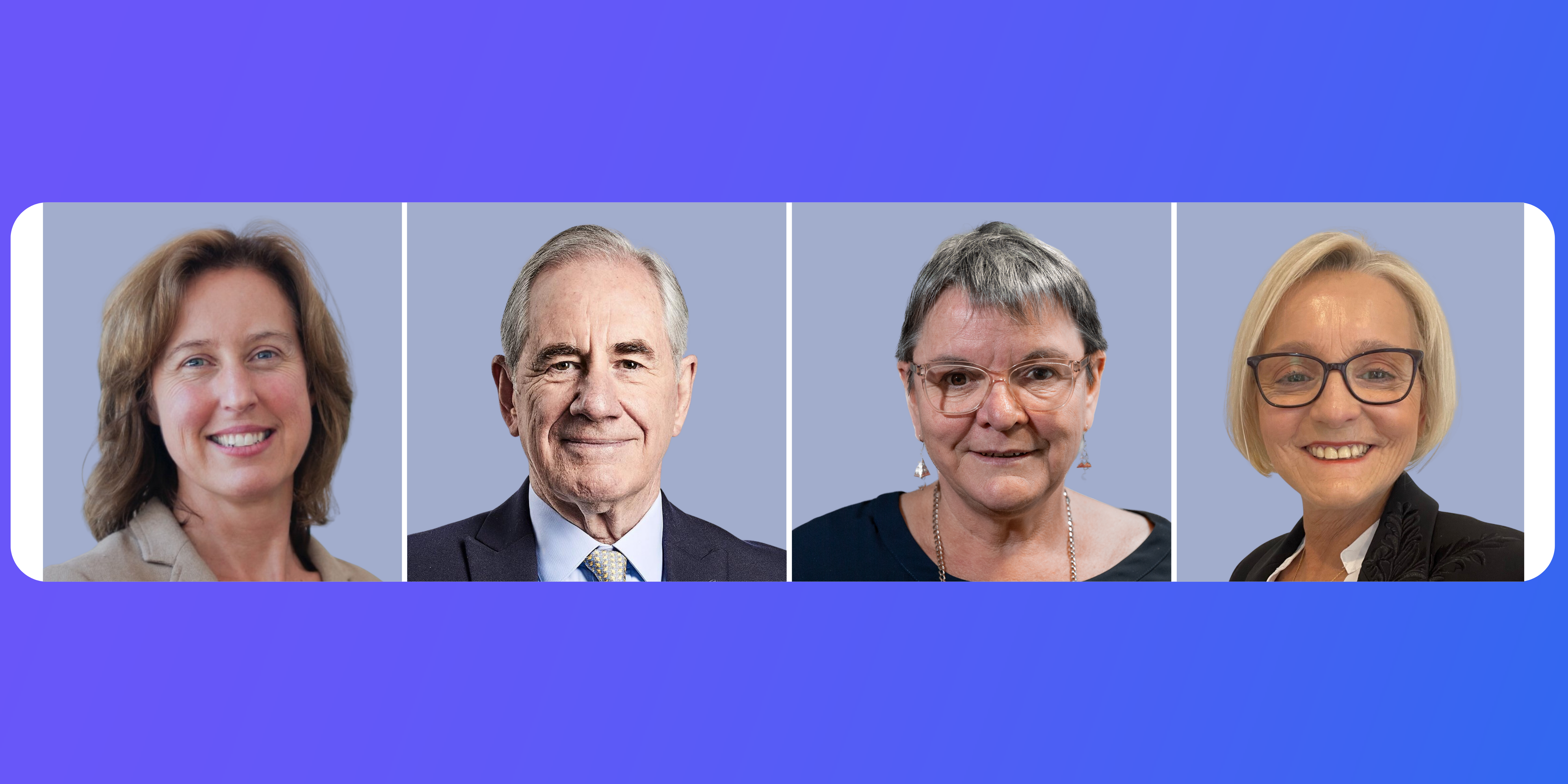
Professor James Fallon: Chief Technology Officer and Head of Research Operations at the Bionics Institute
Dr Sophie Payne: Research Fellow at the Bionics Institute
Associate Professor Evange Romas: Director of Rheumatology at St Vincent’s Hospital Melbourne
Mr Nick Antoniou: Hand Therapist who treats patients with rheumatoid arthritis
Our device to treat rheumatoid arthritis
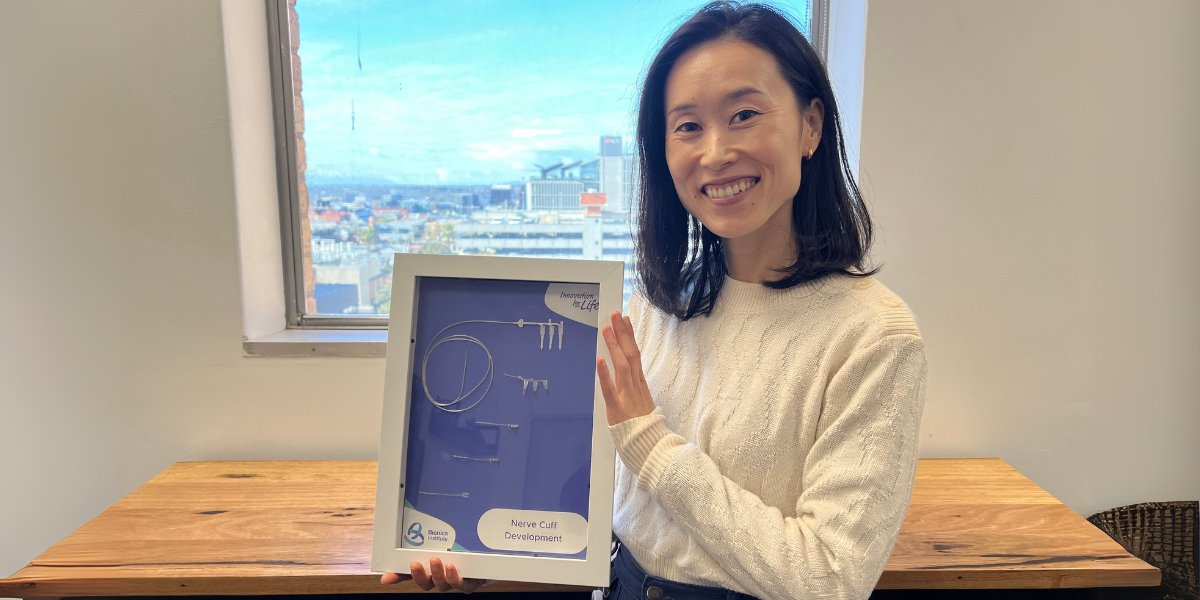
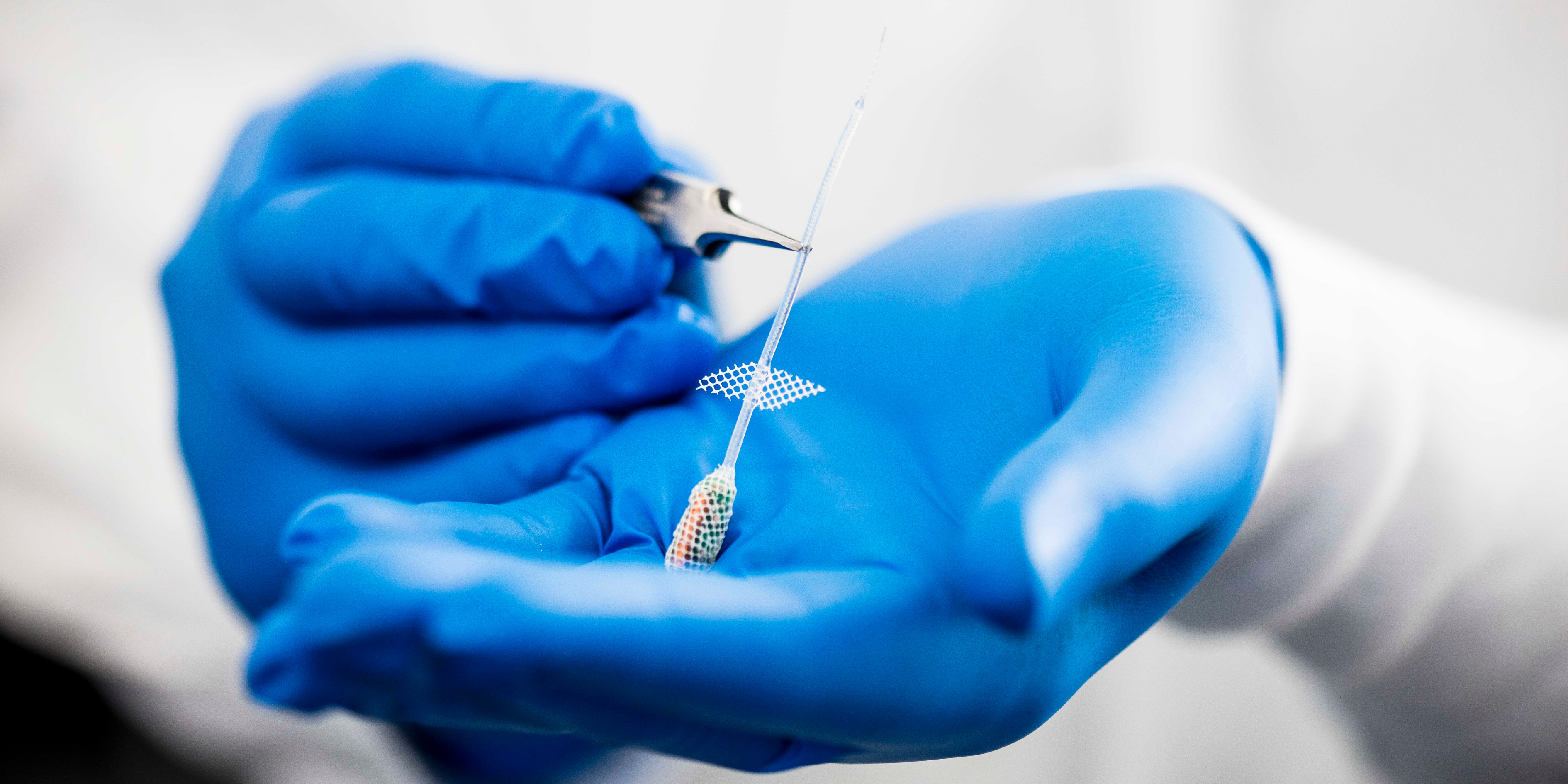
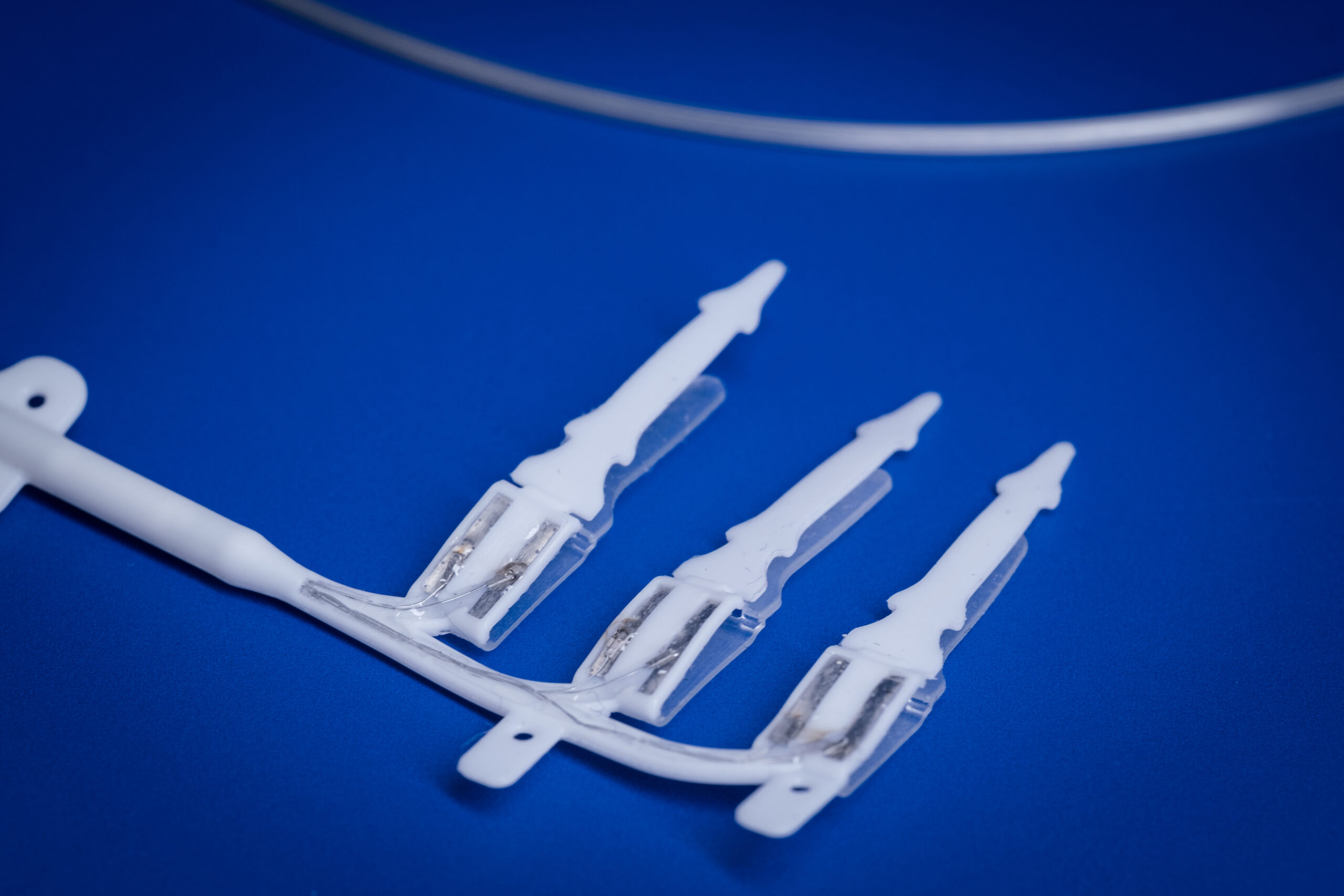
Bionics Institute researchers have developed a small electrical device that stimulates the vagus nerve to reduce inflammation caused by rheumatoid arthritis.
The vagus nerve runs from the brain to the gut with branches to several organs, including the lungs and the heart. Among many other functions, it controls the body’s natural anti-inflammatory response.
Powered by a battery that sits under the skin at hip level, the groundbreaking device has been designed to stimulate the vagus nerve, as needed, to dampen the body’s overactive immune response and prevent long-term damage.
Currently in the early stages of development, the device will eventually be implanted into people with drug-resistant rheumatoid arthritis using key-hole surgery.
Unlike devices under development elsewhere the device is implanted at abdominal level, rather than at the neck level, which means there are no effects on the lungs or the heart.
As the stimulation kickstarts the body’s natural mechanisms, people with rheumatoid arthritis will not experience the side effects associated with current drug therapies.
Find out more about our rheumatoid arthritis device here
Event highlights
Dr Sophie Payne introduces the drug-free treatment being developed
Dr Evange Romas looks in detail at the current treatments available for rheumatoid arthritis
Professor James Fallon explains how the Bionics Institute became involved in arthritis research
Nick Antoniou shares his insights into how hand therapy can play a part in managing rheumatoid arthritis
You might be interested in…





















The Bionics Institute is grateful to receive a new MRFF Chronic Neurological Conditions grant in support of our EarGenie research.
You might be interested in…
The Bionics Institute is grateful to receive a new MRFF Chronic Neurological Conditions grant in support of our EarGenie research.
I think it’s really good for young scientists and people who have a passion for science to see how science can be applied and how it can influence.
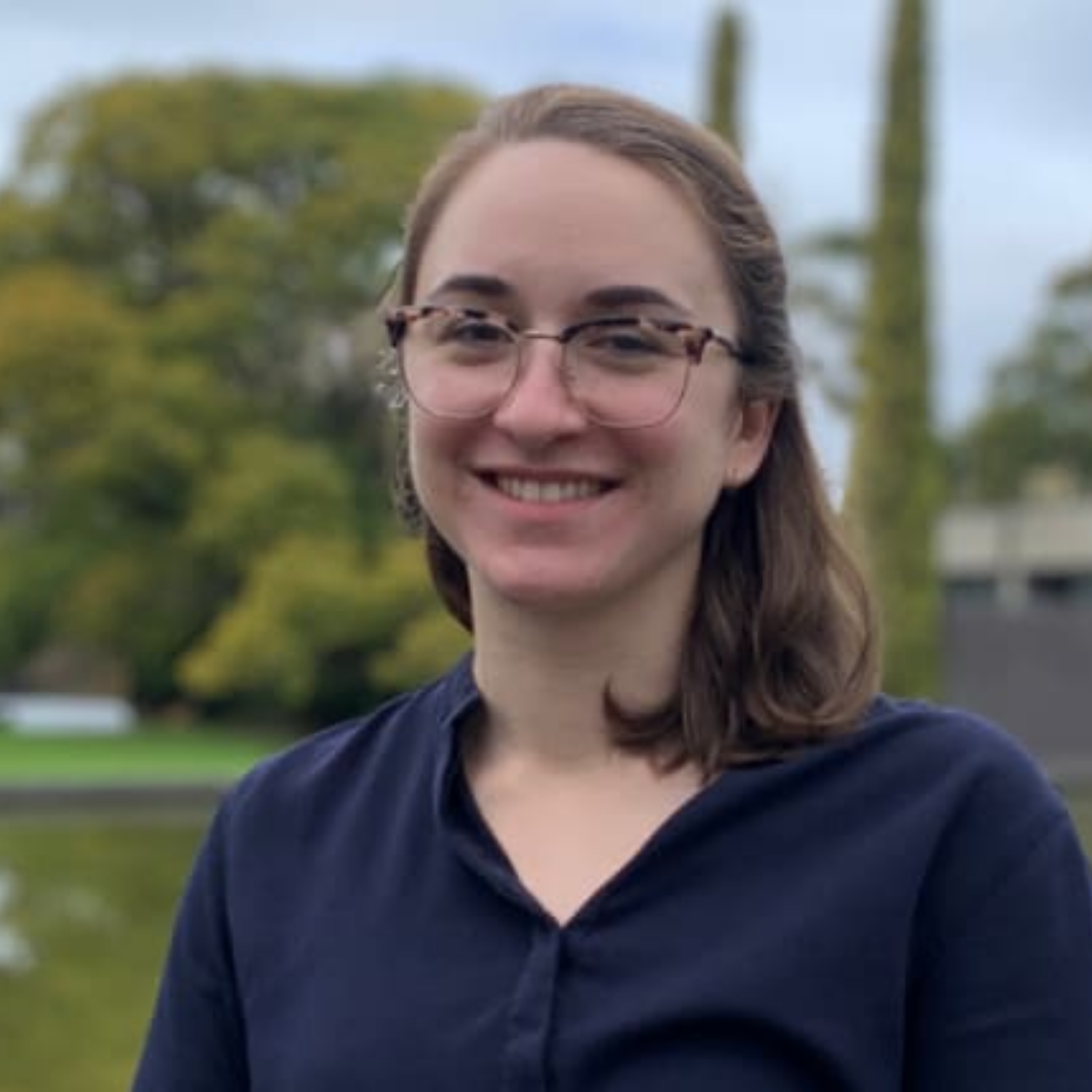
After discovering a passion for science at high school, Emily completed a Bachelor of Science at Melbourne University, specialising in biochemistry and molecular biology.
Having prominent female role models in science motivated her to move to this career.
“I did science all through school, so it kind of started there.
“it’s pretty cool to have lots of influential women throughout STEM.”
Emily is excited about learning from Associate Professor Gérard Loquet, who currently holds an honorary principal fellowship at the University of Melbourne and has authored over 30 peer-reviewed scientific papers
“I googled his work and was blown away,” Emily said.
“I feel very lucky (to work under Gérard).”
Emily’s internship at the Bionics Institute will assist her to pursue a career in pharmacovigilance, where she hopes to facilitate the development of pharmaceuticals and medical devices from R&D stage to the market.
Meet our Girls in STEM Mentors
You might be interested in…
The Bionics Institute is grateful to receive a new MRFF Chronic Neurological Conditions grant in support of our EarGenie research.
Ms Hannah Crawford
Ms Hannah Crawford is an experienced finance executive and board member. Commencing her career at Ernst & Young and Arthur Andersen, Hannah was a Director of Grant Samuel for 14 years, providing strategic financial advice to a range of high profile companies. Hannah says: “I feel extremely privileged to have the opportunity to work with the dedicated management team and Board of the Bionics Institute and look forward to contributing to the outstanding work to help transform people’s lives”.
Ms Sujata Stead
Ms Sujata Stead is CEO of Cambridge Boxhill Language Assessment, a company that has seen 1200% growth under her leadership and transforming its product, the Occupational English Test into a global leader in healthcare language assessment. Sujata says: “I am looking forward to working closely with the Bionics Institute Board and management team to ensure that life-changing medical devices are translated into clinical practice for the benefit of patients worldwide.”
Mr Mike Younger
Mr Mike Younger is a Portfolio Manager at Prime Value Asset Management having held roles in his area of expertise, small and micro cap equity funds management at Rest Super, Goldman Sachs and Citigroup. He says: “I am delighted to join the Board of the Bionics Institute at such an exciting time in its history, as it embarks on the development and commercialisation of several treatments that will prove life-changing for so many afflicted people around the world.”
You might be interested in…
The Bionics Institute is grateful to receive a new MRFF Chronic Neurological Conditions grant in support of our EarGenie research.
After discovering a passion for science at high school, Emily completed a Bachelor of Science at Melbourne University, specialising in biochemistry and molecular biology.
Having prominent female role models in science motivated her to move to this career.
“I did science all through school, so it kind of started there.
“it’s pretty cool to have lots of influential women throughout STEM.”
Emily is excited about learning from Associate Professor Gérard Loquet, who currently holds an honorary principal fellowship at the University of Melbourne and has authored over 30 peer-reviewed scientific papers
“I googled his work and was blown away,” Emily said.
“I feel very lucky (to work under Gérard).”
Emily’s internship at the Bionics Institute will assist her to pursue a career in pharmacovigilance, where she hopes to facilitate the development of pharmaceuticals and medical devices from R&D stage to the market.
Pioneering innovation
Bionics Institute CEO Robert Klupacs says the test is an excellent example of bioengineering innovation at its best.
He explained: “Dr Shoushtarian’s team uses a technology called functional near-infrared spectroscopy (fNIRS), a non-invasive brain imaging technique that measures blood oxygen changes in the brain.
“Her team has shown that we can diagnose tinnitus with incredible accuracy in a small clinical study. We are now seeking funding to develop a portable version with easy-to-use software that can be trialed for use in clinics in Australia and around the world.”
He encourages everyone to show their support for people like Deb, and help the Bionics Institute get this test into clinics as soon as possible by donating to the Bionics Institute.

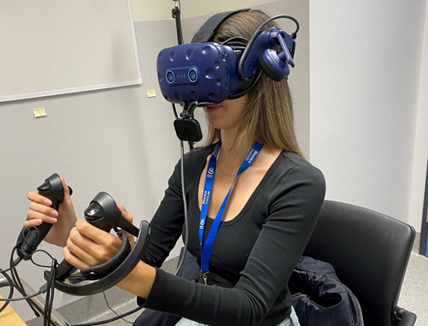
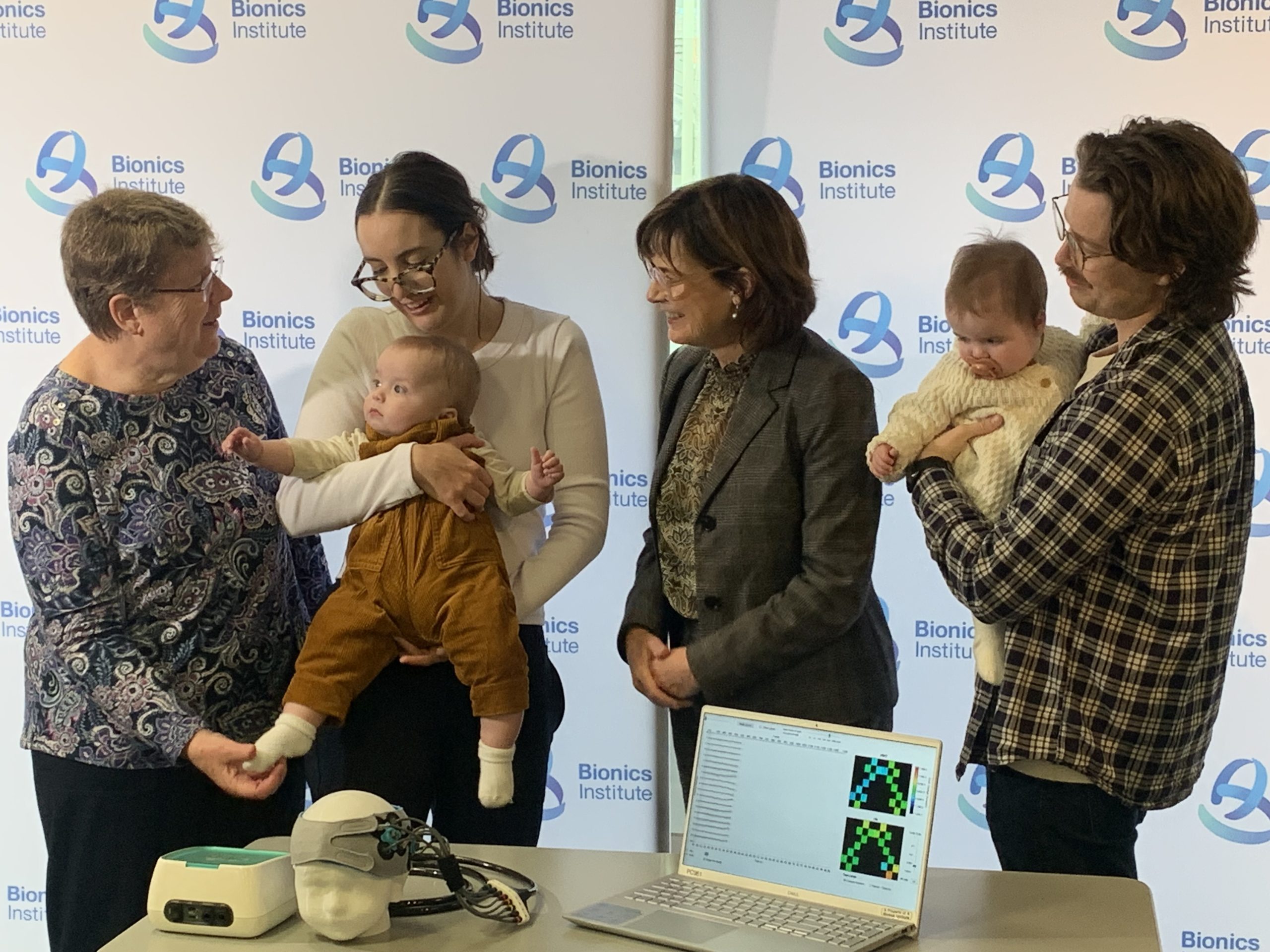
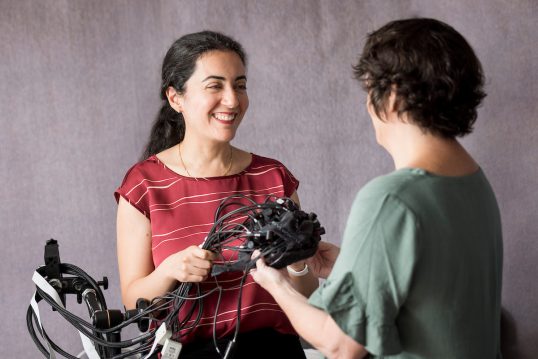
The fNIRS cap used to measure blood oxygen changes in the brain
About the technology
The new diagnostic test imaging device shines near infra-red light over the head using light sources set into a cap. The brain’s blood oxygen levels effect the amount of light reflected back, which is measured by detectors in the cap. The reflex light is analysed using a special algorithm to provide detailed information on brain activity. The device is portable, non-radioactive, quiet and safe to use with implanted devices such as pacemakers.
Did you miss our recent event?
This exciting new test was the focus of the Bionics Institute’s recent event ‘Measuring tinnitus – detecting an invisible condition’.
In our recorded webinar, you’ll learn more about Dr Shoushtarian’s research, and hear from guest speakers Dr Sol Marghzar, doctor of audiology and clinical director of ‘The Hearing Doctor’ in California; Bionics Institute’s Professor James Fallon; and Victoria Didenko, who shares her experience of being diagnosed and living with tinnitus.
You might be interested in…
Our invitation to Year 10/11 students with an interest in STEM.
The Bionics Institute Girls in STEM Mentoring Program aims to inspire high school students to study science, technology, engineering or mathematics at university.
The program began in 2017, with just two students from Ivanhoe Girls’ Grammar School. In 2023, the program expanded to 72 students from 18 schools, and planning has begun to expand the program across Australia in the future.
Schools nominate up to four Yr 10 or Yr 11 students, who have a strong interest in STEM subjects, to join the program each year. Over a six month period, the students meet with a leading female STEM professional (five online meetings) to learn about their area of expertise.
Through these interactions, students learn to source and summarise complex scientific information and receive guidance on reading and understanding scientific articles. The program culminates with participants presenting their learnings with to peers at their school, and attending a Celebration event with other participants and mentors.
For more information about the Bionics Institute veski Girls in STEM Mentoring Program, contact veski: https://www.veski.org.au/
Hear from our program participants
Details of the Girls in STEM Mentoring Program
-
- In Term 1, your school selects up to four students to take part in the program and nominates a teacher to liaise with the Bionics Institute.
- The liaison teacher completes a form, providing a media consent form for each student and indicating which area of STEM the students are interested in.
- Students are allocated a mentor based on areas of interest in groups of two or four.
- Mentors communicate with their allocated students by email to arrange monthly online mentoring sessions at mutually convenient times from May to September.
- Students will be asked to gather information on a specific area of research using Google approximately once a month with the aim of increasing their knowledge over time. Initially, the information will be broad, for example hearing impairment. It will progress on to more detailed information about a specific area, for example cochlear implants. Towards the end of the program, students will be introduced to information about their mentor’s specific area of research.
- At the end of the program, each pair will present their learnings in a five-minute PowerPoint presentation at a school assembly or in class during October. Parents, peers and mentors can be invited to attend.
To learn more, take a look at our mentoring guidelines, which includes an example calendar of events for the program.
Learn how the Girls in STEM Mentoring Program works
What time commitment is involved?
- Each month, students will research one topic area on Google and write a one-page summary of their findings in dot point format.
- Mentors will arrange a 20 minute meeting each month online via Zoom or similar to discuss the summaries, give feedback and answer questions.
- Towards the end of the program, mentors will ask students to create a PowerPoint presentation based on their work and discuss real research papers.
- Students give a five-minute presentation in pairs at school assembly or in class, organised by the liaison teacher.
- The Mentors are encouraged to invite the students for a tour of their workplace as an excursion at a mutually convenient time during the program.
Feedback from the Girls in STEM Mentoring Program
Ivanhoe Girls Grammar School teacher testimonial
Our students have been involved with the Bionics Institute for several years and students have relished the opportunity of working in research science with acclaimed female mentors.
Not only have they had experience in laboratories and other research settings their mentors have given a firsthand account of a career for women in science research fields.
Mentors have provided insight all the way from undergraduate entry and experiences, through the process of applying for grants and other funding as well as presenting research findings at conferences. These insights have been invaluable for our students.
In addition, they have enhanced their communication skills, effectively and regularly communicating with their mentors and ultimately presenting their projects to a broad audience.
Former Ivanhoe Girls’ Grammar School student story
Tara Stewardson was one of the first participants in the inaugural program and she told us how it inspired her to pursue a career in STEM in this case study.
Ivanhoe Girls’ Grammar School students involved in the Girls in STEM Mentoring Program in 2021 were offered the following STEM courses for study in 2023:
- Animal and Veterinary Biosciences at La Trobe University or Charles Sturt University
- Biomedicine at the University of Melbourne
- Laws (Honours)/Biomedical Science at Monash University
- Nursing/Midwifery at Deakin University
- Physiotherapy at Victoria University or Podiatry (Honours) at La Trobe University
- Science at the University Of Melbourne.
Loreto School news article
Three students from Loreto school describe their experience of the program in this news article on the Loreto website.
Bionics Institute 2022 Girls in STEM celebration event video
The 2022 program culminated in a celebration event with inspiring guest speakers and certificates presented by a Victorian state government MP. Take a look at a recording of the event here: 2022 Girls in STEM celebration event.

Work with us
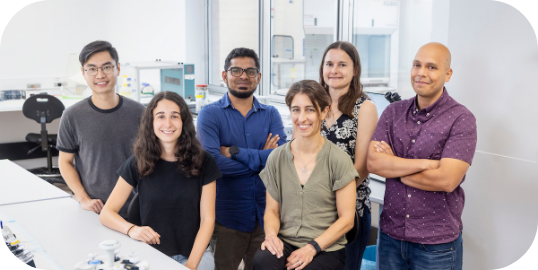
Working at the Bionics Institute, a world leader in the development of medical devices, is both inspiring and rewarding.

A new nerve treatment invented by Melbourne researchers at the Bionics Institute is bringing hope to people with rheumatoid arthritis.
The tiny piece of ground-breaking technology – the size of a thumbnail – could replace drug treatment for thousands of people suffering from pain and inflammation caused by the disease.
Living with rheumatoid arthritis
Karen Morgan, 57, who has lived with rheumatoid arthritis for over 22 years says she will be first in line to test the device when it goes into clinical trials.
She said: “The medication makes the pain bearable most of the time, but when I have a flare up it’s a struggle to do anything.
“Some days my joints are burning hot, stiff and swollen. I find it very hard to walk. I can’t put my car key into the ignition.”
Affecting nearly half a million Australians, rheumatoid arthritis is currently treated using a cocktail of drugs with unpleasant side effects that have severely restricted Karen’s life.
“The medication has pretty much destroyed my immune system. During COVID I’ve had to avoid people most of the time. It’s been awful.”
New treatment brings new hope
Amazingly, this new treatment is being developed by Karen’s niece, Bionics Institute researcher Dr Sophie Payne and her team.
Dr Payne says the battery powered device stimulates a major nerve, called the vagus nerve, with electricity to reboot the body’s built-in healing system.
She said: “In rheumatoid arthritis, the body attacks its own joints causing inflammation, pain and stiffness.
“We’re hoping to take it to clinical trials in just two years,” she said.
Find out more in this interview with Virginia Trioli on ABC and this story in the Herald Sun.
“By stimulating the vagus nerve, which controls the body’s anti-inflammatory reflex, we can dampen the inflammation to reduce the pain and stiffness and allow people with rheumatoid arthritis to move freely. Dr Sophie Payne
Backed by clinical expertise
Dr Evange Romas, head of the rheumatology unit at St Vincent’s Hospital is working closely with the Bionics Institute team to ensure the device is optimised for his patients.
He says that, in addition to coping with damaging side effects, around 40% of patients stop responding to drug therapy and he is looking forward to the day when he can offer the new vagus nerve device treatment as an alternative.
He said: “I have been involved in some great advances in the treatment of rheumatoid arthritis during my career.
“However, this new treatment is incredibly exciting and I’m doing everything in my power to help the Bionics Institute researchers get it into the clinic for the benefit of my patients as soon as possible.”
A ‘set and forget’ treatment
Bionics Institute CEO, Robert Klupacs says the beauty of the device is that it can be attached to the vagus nerve in the abdomen using keyhole surgery and the battery, which sits under the skin at hip level, only needs to be changed every ten years.
“We’re working towards the day when people with rheumatoid arthritis won’t have to remember to take medication every day and won’t have to cope with side effects.
“They can ‘set and forget’ about this electrical vagus nerve device, leaving their body to do the work for them,” he said.
Every donation towards this research will help the Bionics Institute take the vagus nerve device to clinical trials much more quickly and transform the lives of people like Karen.
About the Bionics Institute
The Bionics Institute is an internationally recognised, independent medical research institute that solves medical challenges with technology. We lead the world in the development of medical devices and therapies to transform the lives of people with a range of conditions from hearing impairment and Parkinsonʼs disease to epilepsy, arthritis and diabetes. The Bionics Institute is a partner in ACMD – Australia’s first hospital-based biomedical engineering research centre located at St Vincent’s Hospital Melbourne.
Did you miss our recent event?
This exciting new nerve treatment was the focus of the Bionics Institute’s recent Rethinking Rheumatoid Arthritis event.
Bionics Institute’s research director Professor James Fallon and lead arthritis researcher Dr Sophie Payne were joined by Dr Evange Romas and specialist in hand therapy Nick Antoniou. To provide their expert insights into the disease and how the ground-breaking new device new device could transform the lives of people living with rheumatoid arthritis.
Watch their individual presentations or full event recording below.
The Bionics Institute is grateful to receive a new MRFF Chronic Neurological Conditions grant in support of our EarGenie research.
It’s very fulfilling to work somewhere that focuses on taking new ideas and bringing expertise together, to translate them into something effective and useful that will have a positive impact on someone’s life. Dr Gautam Balasubramanian
Gautam also plays a key role in helping the Institute prepare for the future.
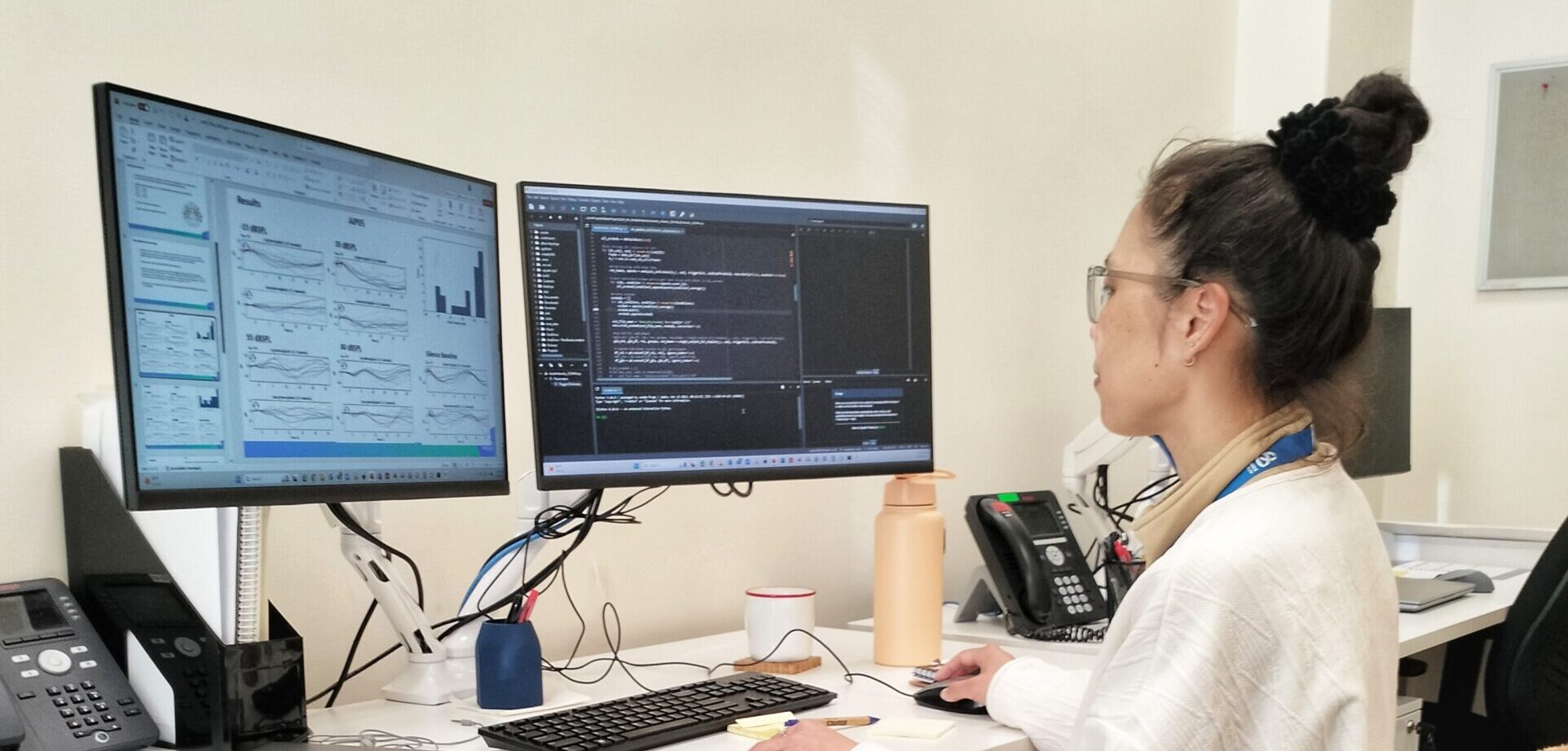
By using the latest data science practices learned from his previous roles in the high-tech telecommunications, defence and finance sectors, he is aiming to find common transferable techniques, as well as uniform ways of developing and running analytics projects.
He hopes these could be used to solve problems across various research areas, fostering greater collaboration between teams and enabling faster progression of scientific research, to speed up treatments from the lab to the bedside.
Describing his journey from business to the Bionics Institute, he says that medical research is an area where he can be creative and exercise all aspects of his personality.
He enjoys looking at existing projects and bringing in cutting- edge knowledge from computer science to help advance treatment options available.
He says: ‘I always had a keen interest in health sciences, and even though I may not be a medical professional, I always thought there must be a way I can use my skillset to work on something that can ultimately help people.’
You might be interested in…
After discovering a passion for science at high school, Emily completed a Bachelor of Science at Melbourne University, specialising in biochemistry and molecular biology.
Having prominent female role models in science motivated her to move to this career.
“I did science all through school, so it kind of started there.
“it’s pretty cool to have lots of influential women throughout STEM.”
Emily is excited about learning from Associate Professor Gérard Loquet, who currently holds an honorary principal fellowship at the University of Melbourne and has authored over 30 peer-reviewed scientific papers
“I googled his work and was blown away,” Emily said.
“I feel very lucky (to work under Gérard).”
Emily’s internship at the Bionics Institute will assist her to pursue a career in pharmacovigilance, where she hopes to facilitate the development of pharmaceuticals and medical devices from R&D stage to the market.
I’m always looking for a new challenge, so I’m really excited to be working towards a new goal, whilst also raising money towards such a worthwhile cause. Mica Haneman
We’d love to hear your fundraising ideas!
If you’re thinking about setting up a fundraiser for Bionics Institute research, or have any questions about how you can do this, click here to see how you can fundraise for us!
You might be interested in…
Imagine ringing and hissing in your head 24 hours a day, 7 days a week…
You can’t sleep. You can’t eat. It stops you from working. You just can’t escape this auditory torment.
If you have a really severe case, you may end up with depression… like Deb has.
No matter what you do, you’re trapped and tormented by this noise.
The worst thing is that no scientifically valid test exists to diagnose or measure your tinnitus. This hinders research into effective treatments. Because how can you develop a treatment if you can’t measure whether it works.
But that can now change… with your generous gift. You can help us develop a breakthrough test and silence the torment of tinnitus!
Such a test would make a huge difference to someone like Deb. Her tinnitus got to the stage where life became unbearable.
“It’s like a gas leak in my head. I’ve got multiple layers of hissing… you feel trapped in your head, trapped and tormented.”
“It’s kicked up my anxiety and depression. Every day now is about coping, not living.”
Deb has tried everything to relieve tinnitus – white noise, masking, cognitive behavioural therapy, hearing aids and natural remedies. Nothing has worked.
Deb admits she’s thought about ending her life when tinnitus got really bad. That’s why she believes a proper diagnostic test and treatment is so important… and why your gift today is so vital.
With your support, you can help bring relief to tinnitus sufferers like Deb and your gift will be matched x 2! But you must donate before 30 June or by the time the matched funding runs out…whichever comes first!
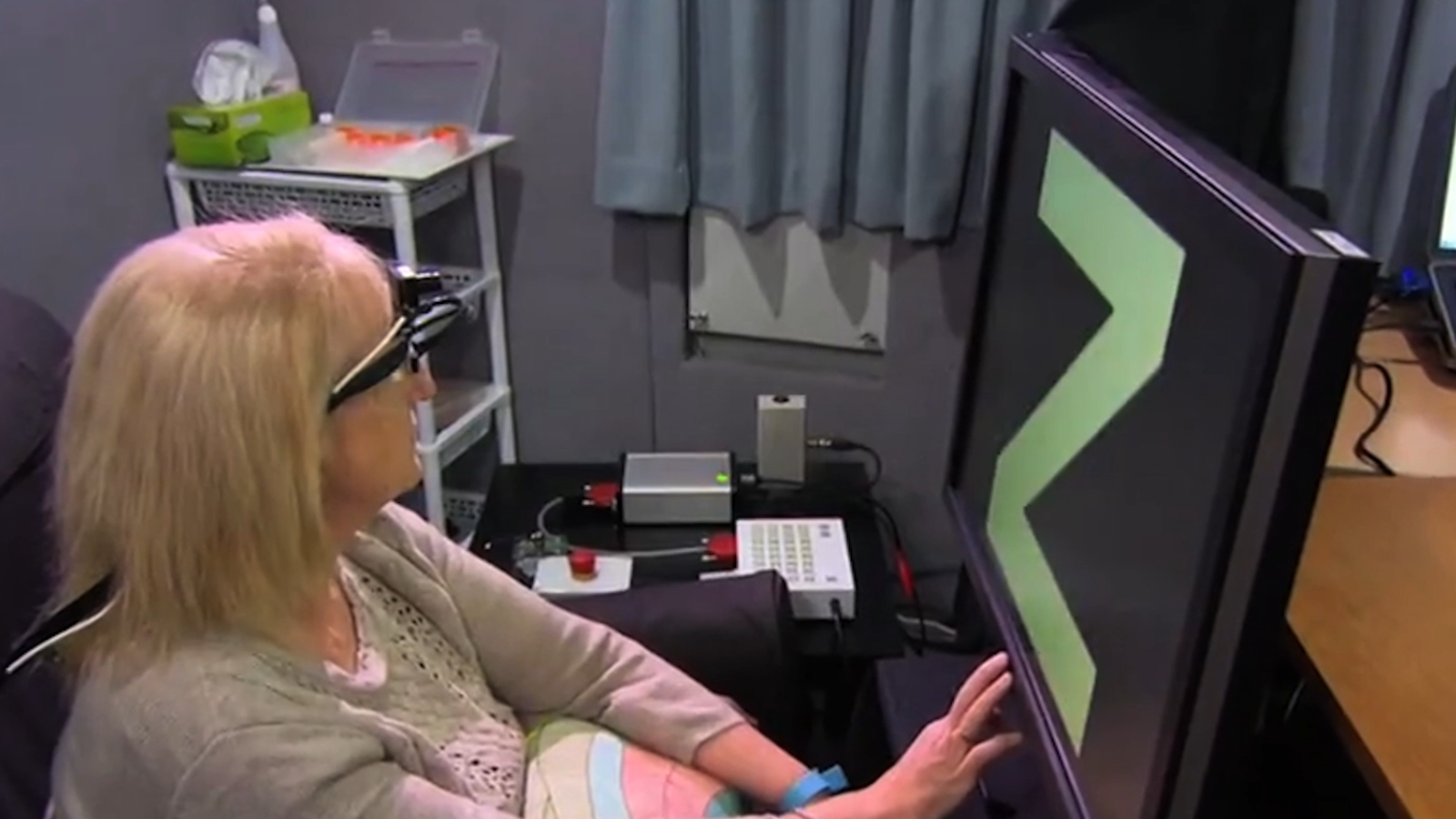
The new tinnitus test uses special imaging technology in a brain cap to shine near infrared light onto the head.
This measures changes in blood oxygen levels in your brain when it responds to a sound. It scientifically shows the presence of noise. Our algorithm then analyses this data to identify whether a patient has tinnitus… and how severe it is.
It can diagnose tinnitus with 78% accuracy and distinguish between mild and severe tinnitus with 87% accuracy.
This has never been done before!
Our team has done a magnificent job bringing the test this far. Now your help is needed to conduct further trials and develop an everyday version of the test that doctors can easily use in the clinic.
Did you miss our recent event?
This exciting new test was the focus of the Bionics Institute’s recent event ‘Measuring tinnitus – detecting an invisible condition’.
In our recorded webinar, you’ll learn more about our tinnitus test from senior Bionics Institute researcher Dr Mehrnaz Shoushtarian, and hear from guest speakers Dr Sol Marghzar, doctor of audiology and clinical director of ‘The Hearing Doctor’ in California; Bionics Institute’s Professor James Fallon; and Victoria Didenko, who shares her experience of being diagnosed and living with tinnitus